this work already existed
before it was made
because mankind is ancient
— Marisa Merz
Marisa Merz (Turin, 1926-2017) was the only woman associated with Italy’s postwar avant-garde movement, arte povera, and occupied a very unique and pivotal role in postwar European art.

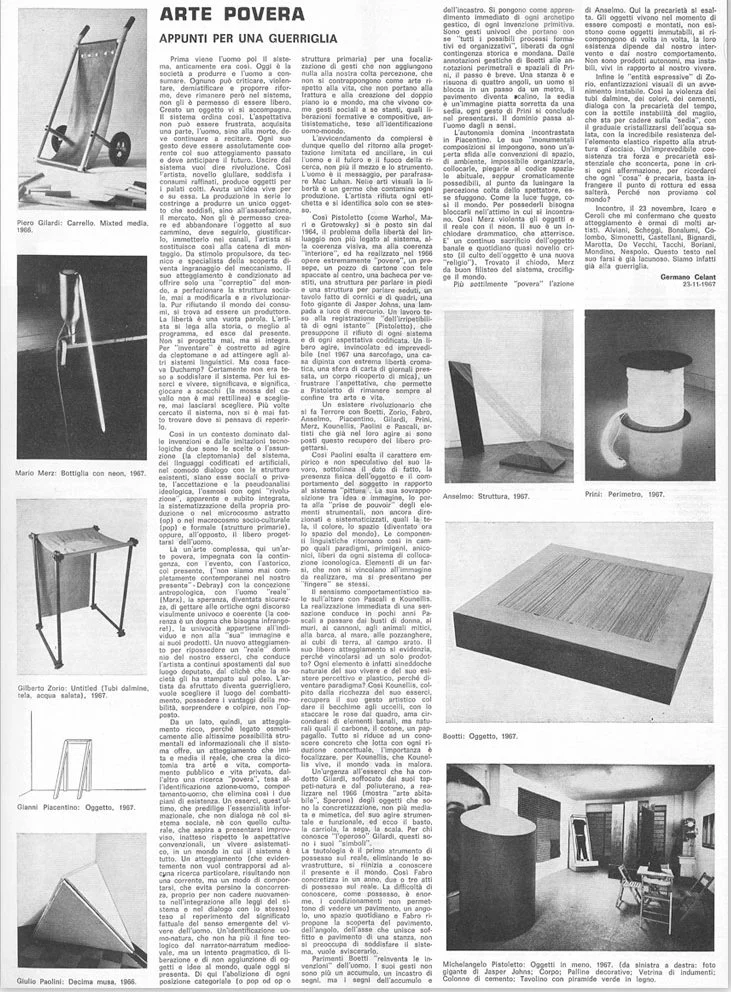
In the late 1960s, a group of Italian artists began to question not just what art looked like, but what it was for and sought to return art to its material essence. Coined by critic-curator Germano Celant, Arte Povera defined “poor” not as a lack of worth but as a rejection of hierarchy by embracing raw materials and everyday gestures over the polished wealth of the art world. It was at Merz’s kitchen table that Celant wrote the 1967 manifesto, Arte Povera: Notes for a Guerrilla War, identifying this radical group of Italian artists, including Marisa’s husband, Mario. The manifesto was first published in Flash Art no. 5, November–December 1967
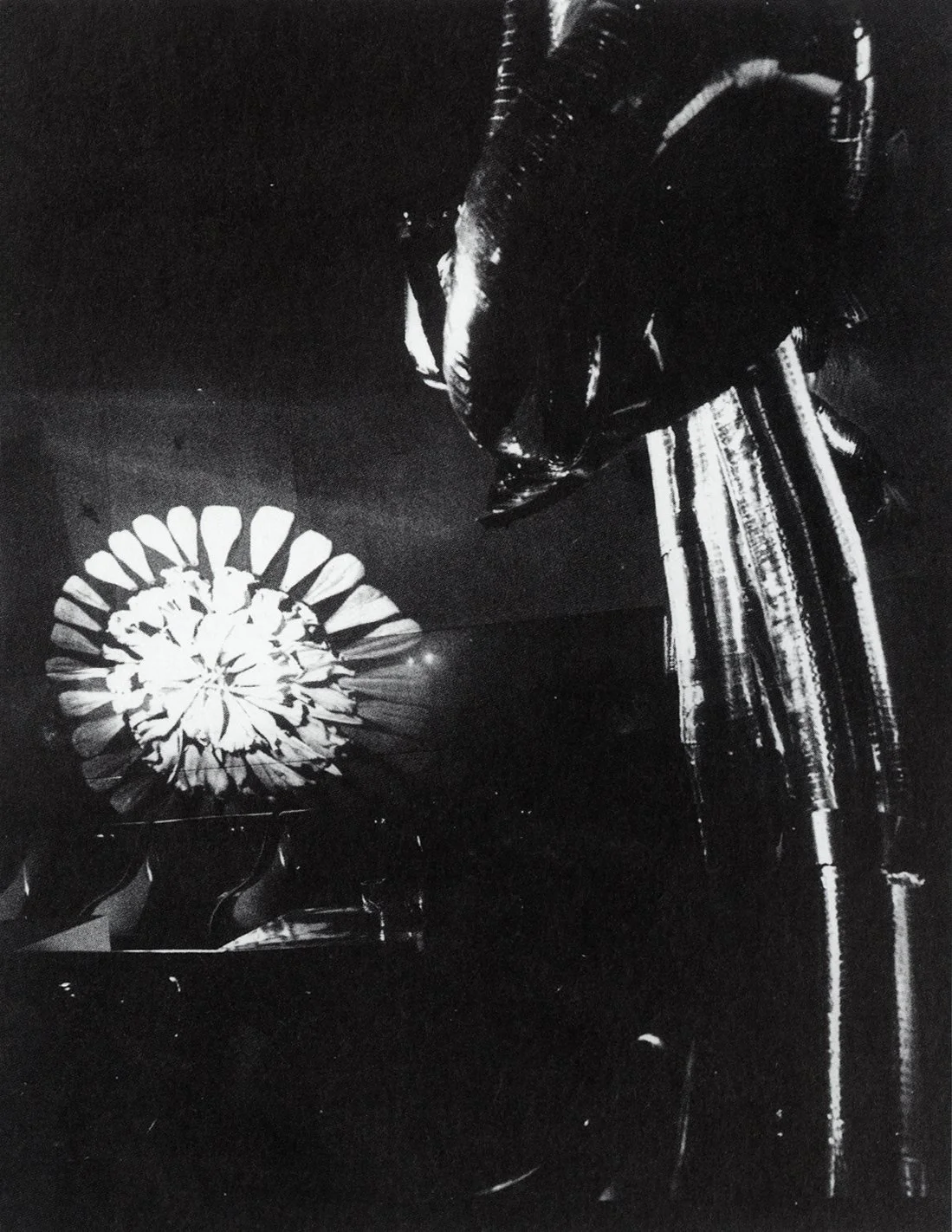
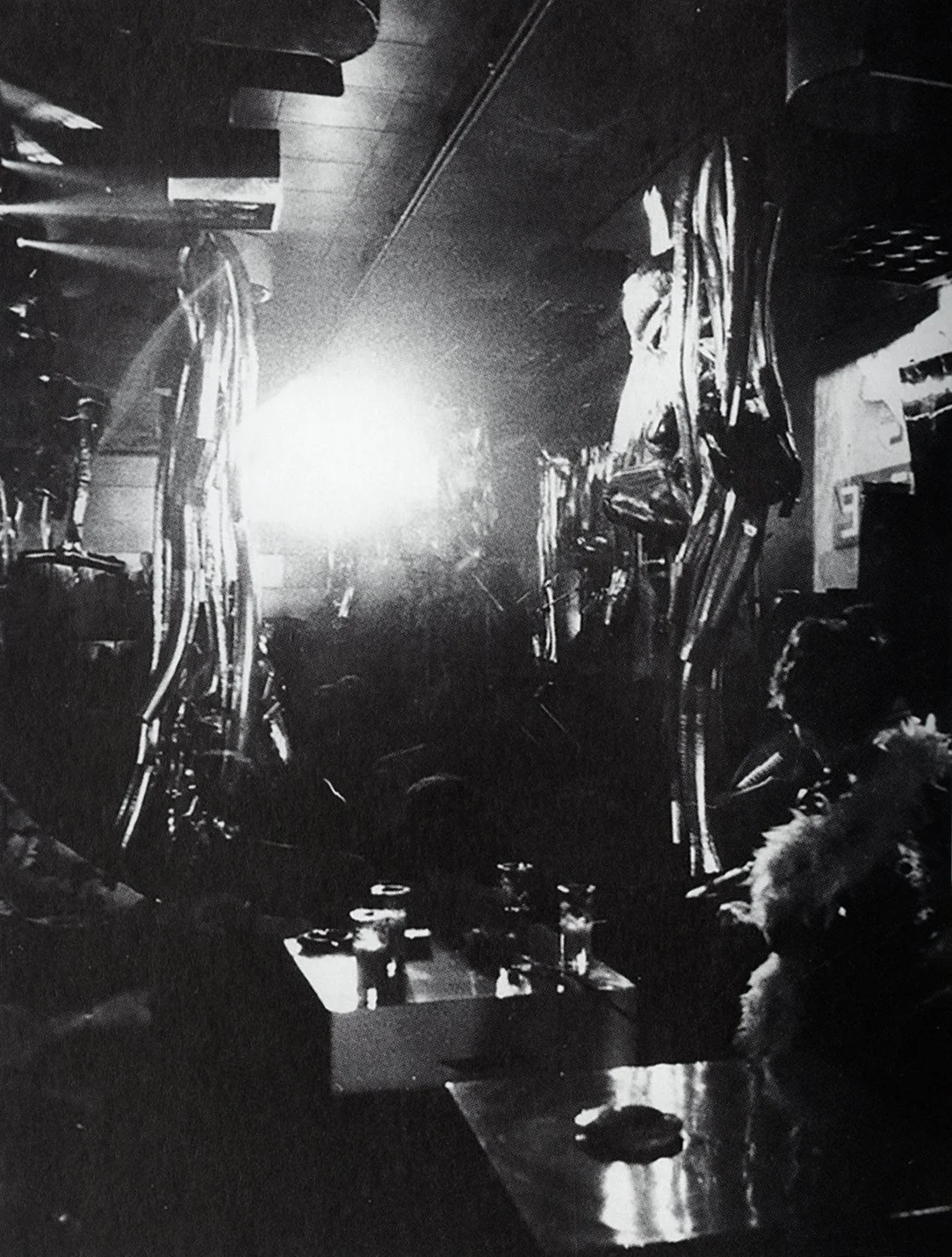
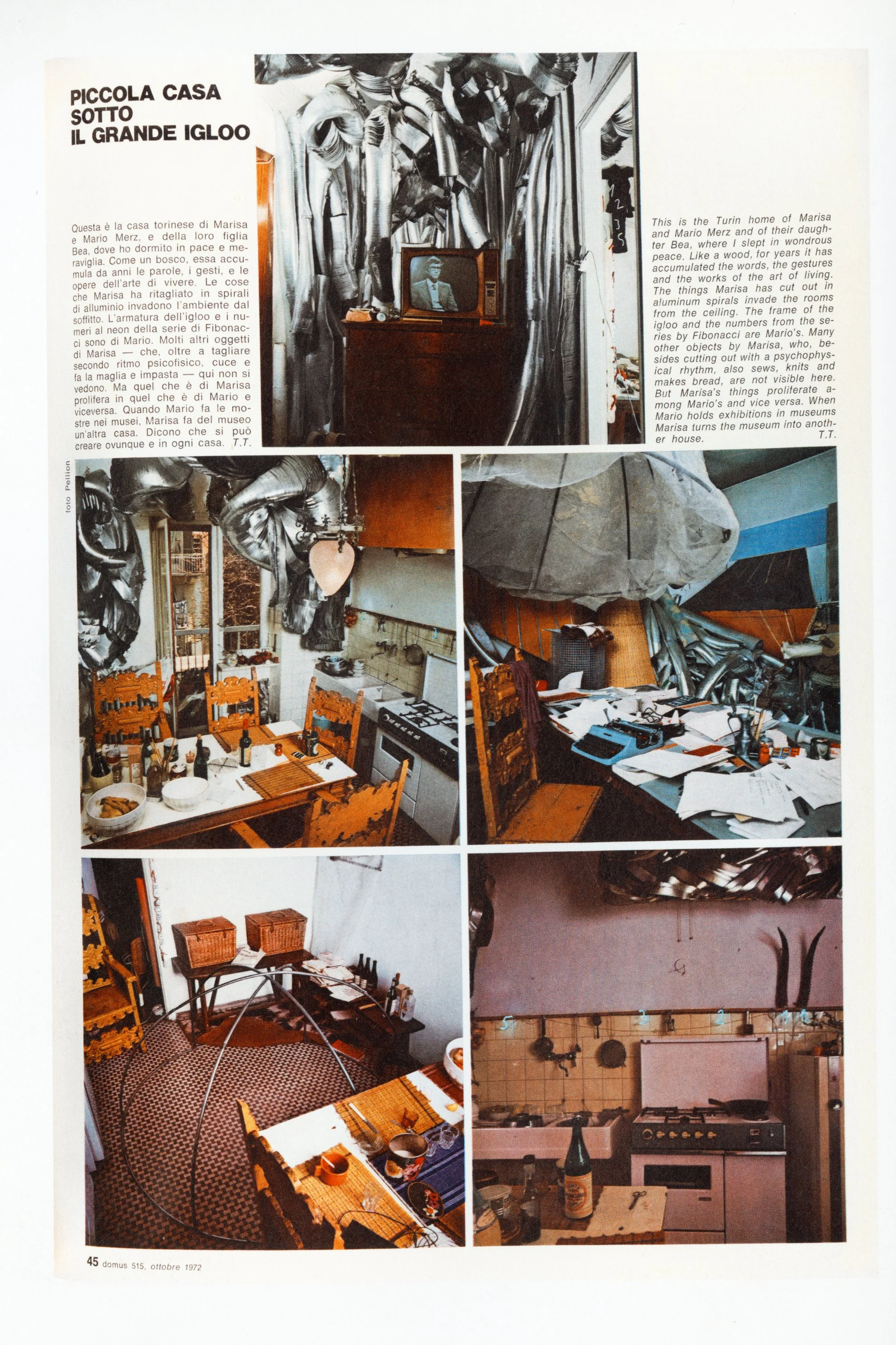
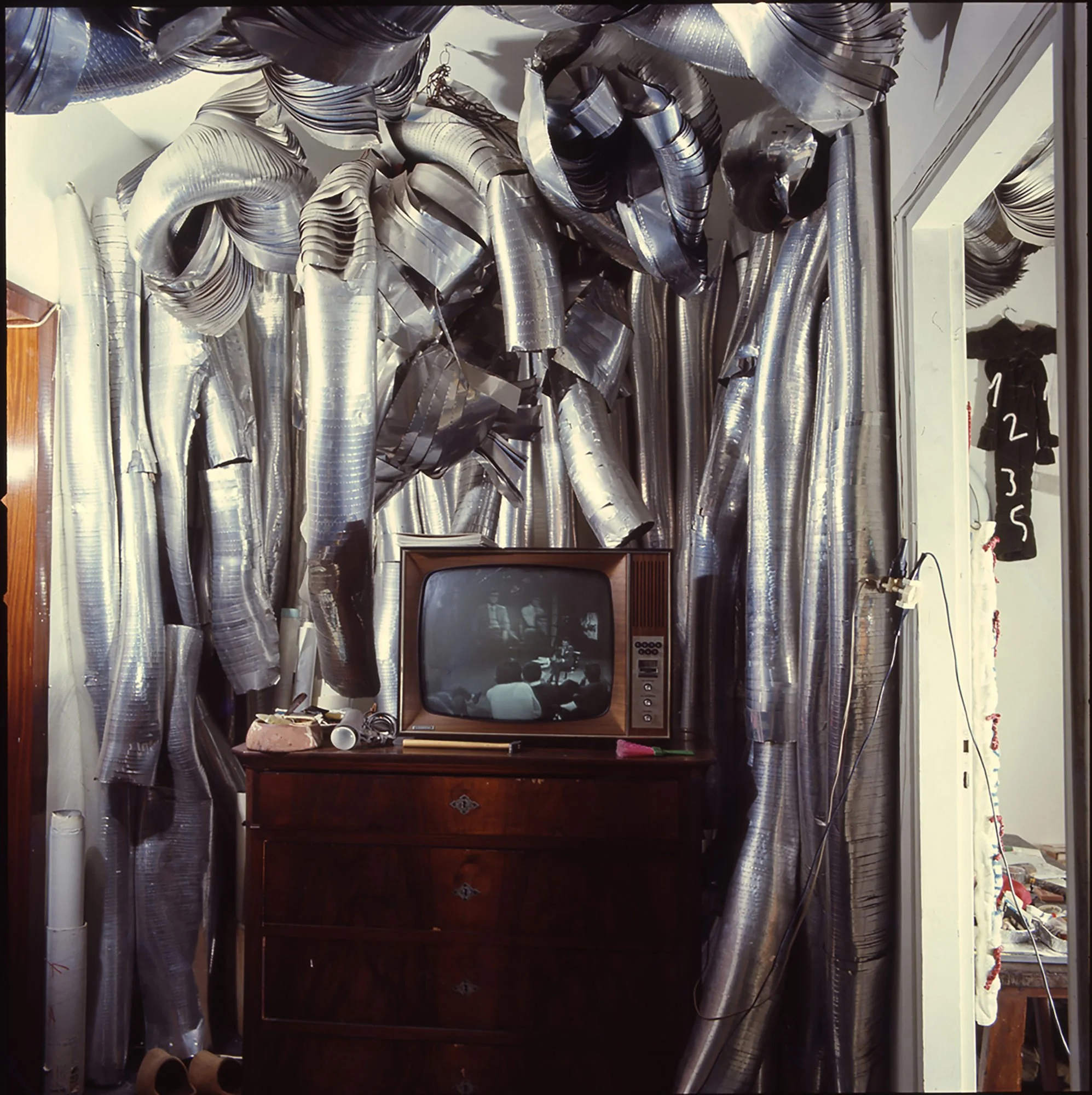
.Around 1966, she began constructing a group of massive, multi-part tubular aluminum sculptures throughout their home in Turin. They were suspended from the ceilings, draped over the stove, and truly inhabited and shared space with the family — constantly evolving and taking on new forms. They would expand and contract, shed and acquire new layers.
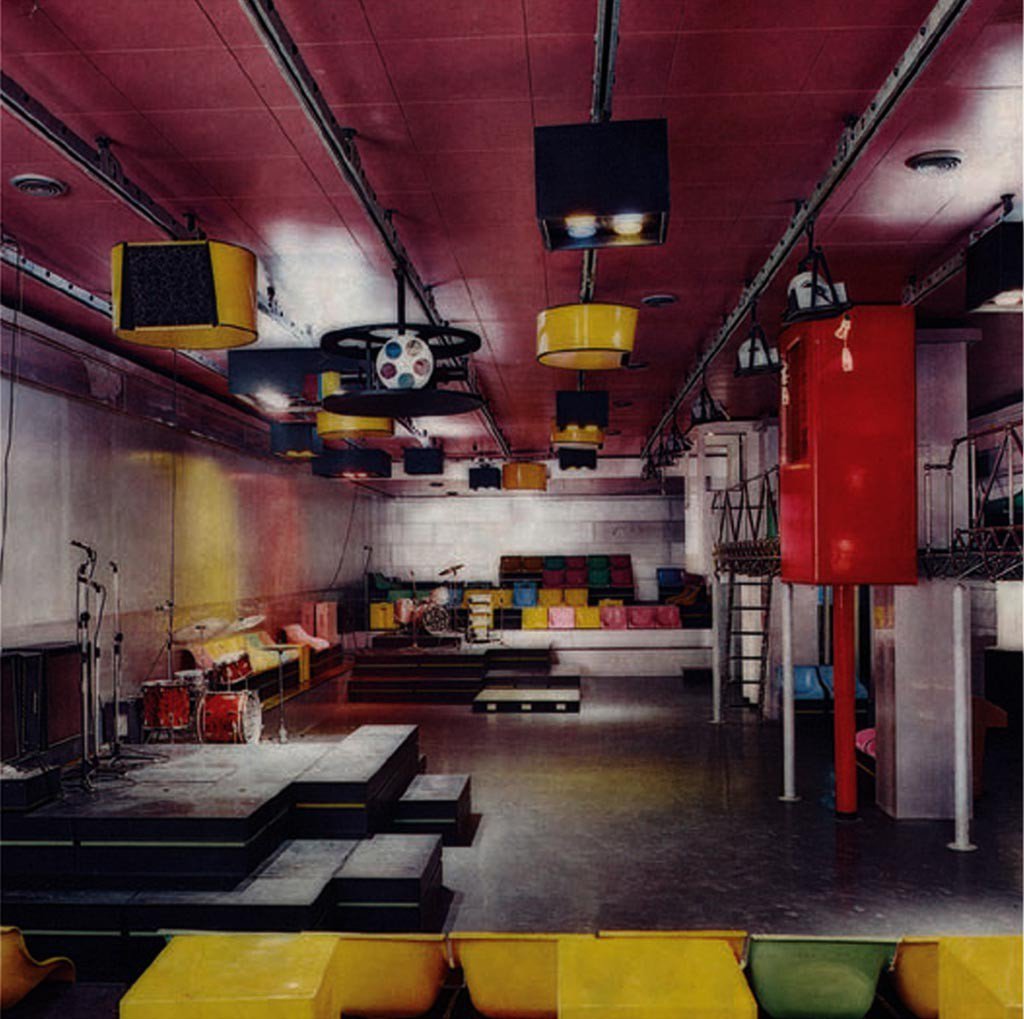
Merz exhibited her work in December 1967 at the experimental disco, Piper Pluri Club. She was interested in interrogating new ways of viewing and thinking about sculpture emerging at the time. It brought new ways of thinking of everyday experiences and a broader situating of the body within the physical environment. There was an element of uncertainty about with whom or how that encounter may manifest.
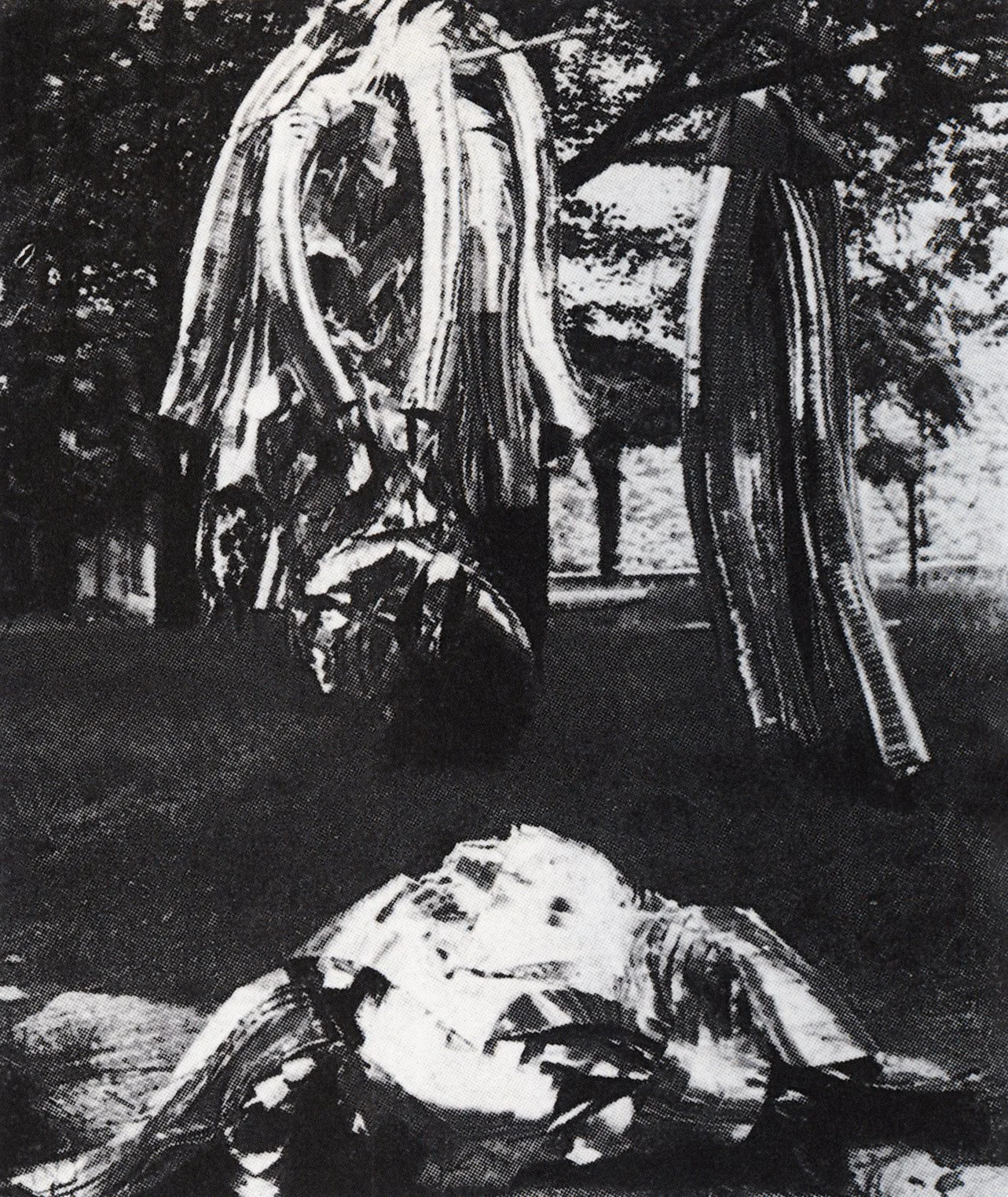
Furthering her experimentation with different means of installation and display, Marisa installed the sculptures outdoors, suspended from trees. Similar to trees, this was a sculpture that grew and transformed over time.