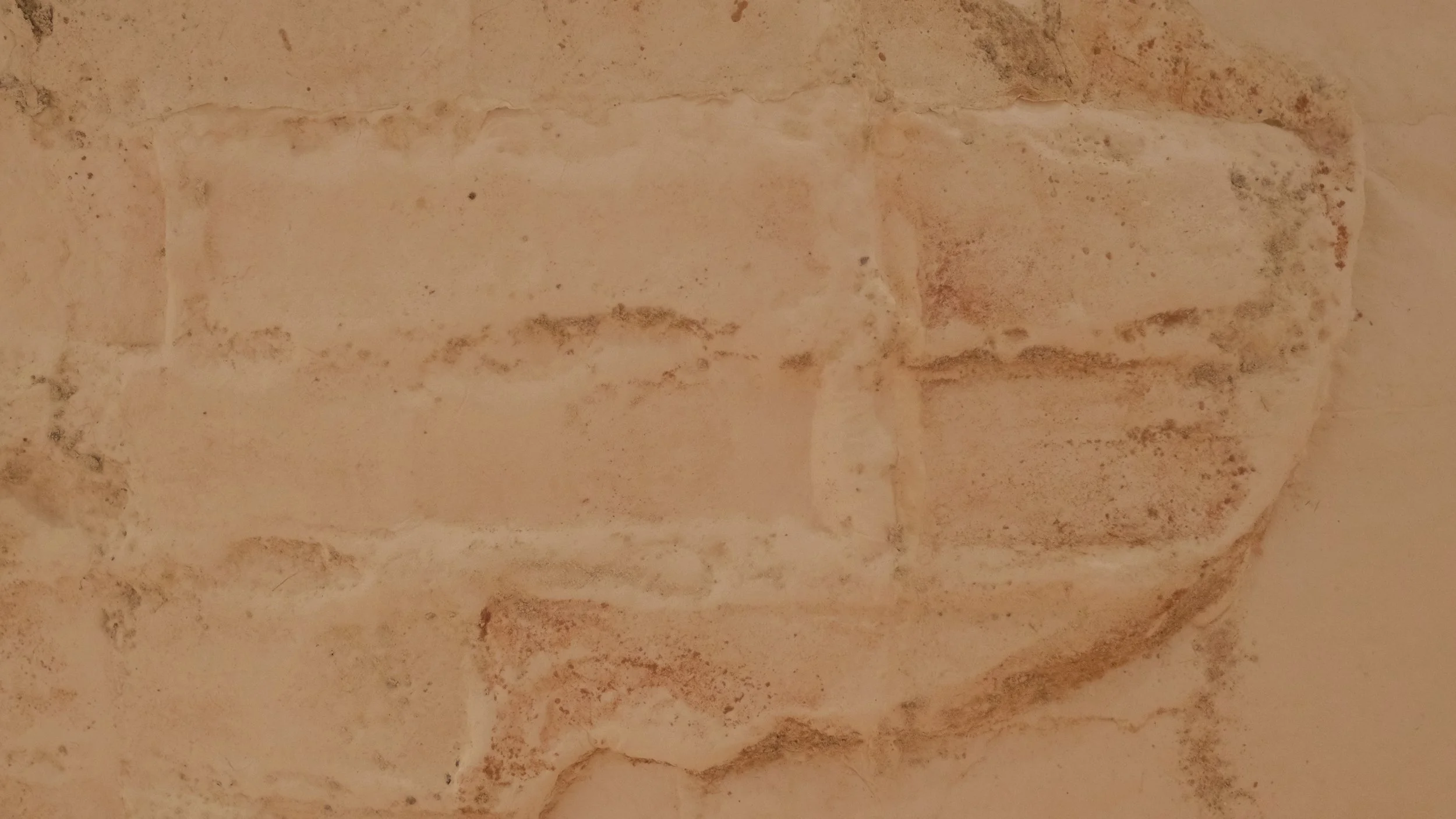
My hand, as I have come to understand it, is not only a tool, but a way of knowing and learning. To return to the hand is not simply to acknowledge its presence in the built environment, but to engage with it directly and to understand what happens when it becomes the means through which knowledge is formed. This return is not abstract. It is physical, repetitive, and often uncertain.
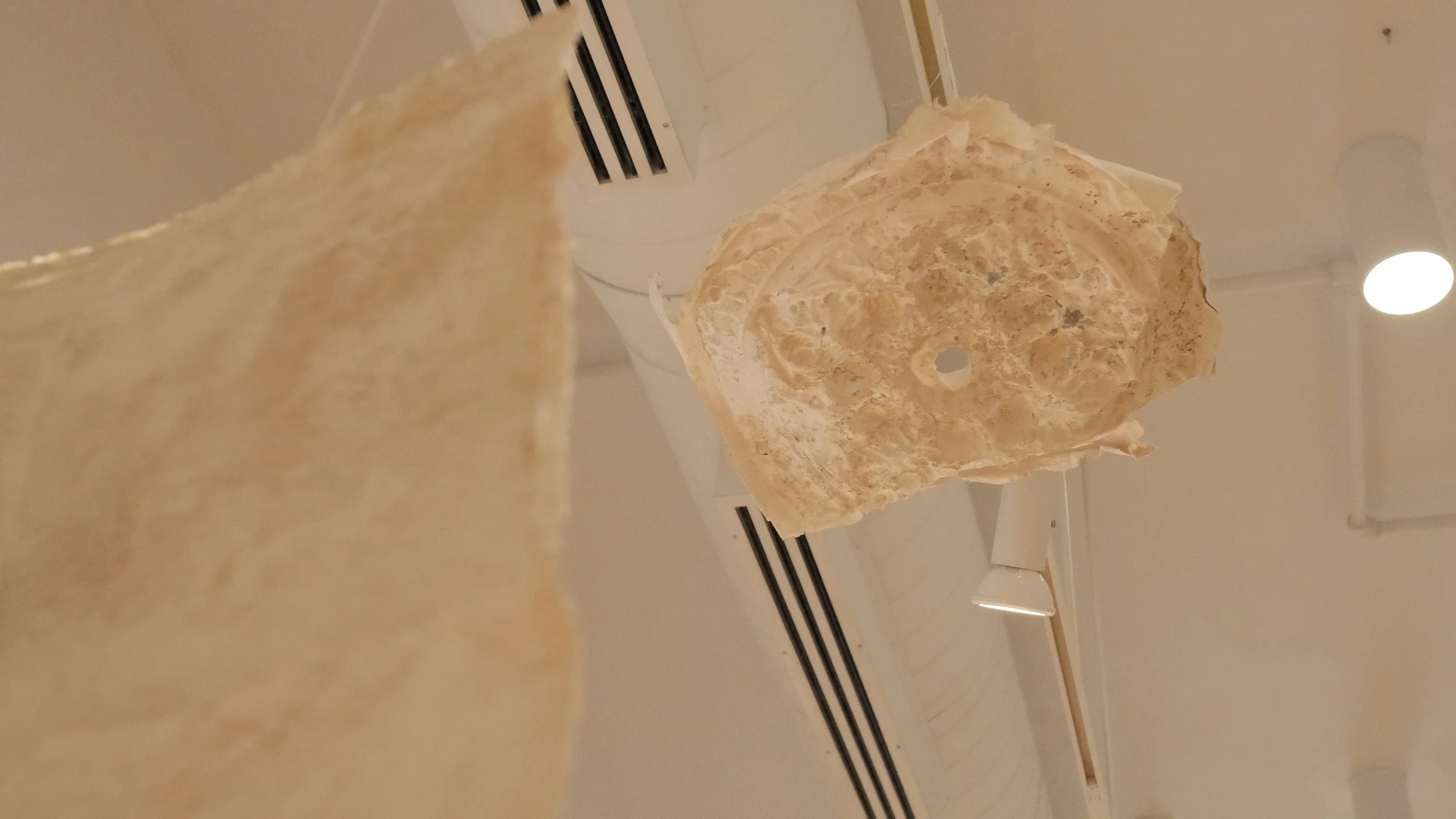
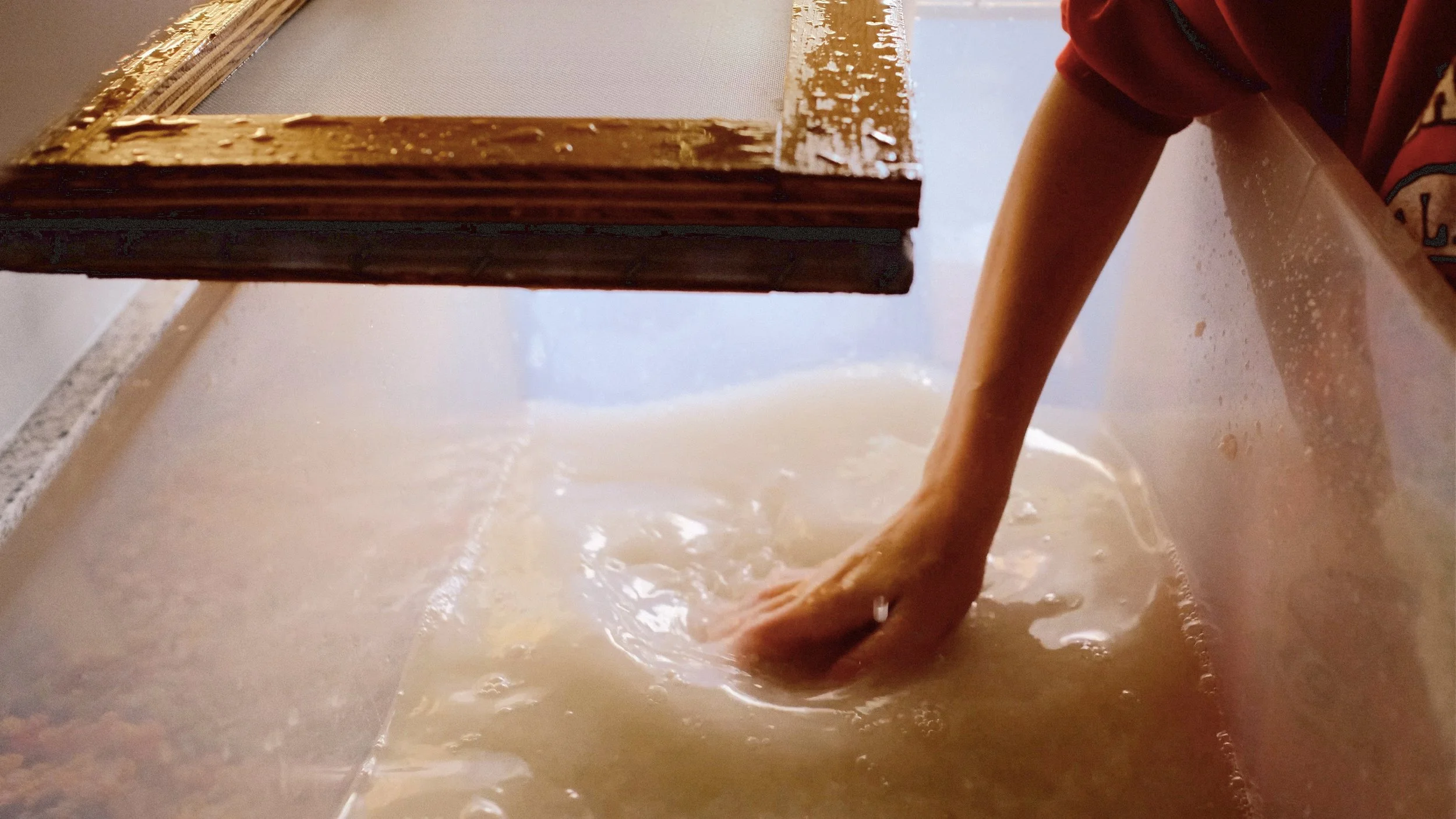
Through this work, I found myself returning not only to the hand, but to my own hand. What began as an exploration of preservation and material memory slowly became a return to my creative self. The process began with the making of the tools themselves. The frame and deckle were built by hand in the wood workshop, cut from marine-grade wood on the table saw. The paper pulp is sourced entirely from RISD’s waste stream — discarded paper collected, broken down in a Hollander beater, and returned to raw pulp through the Loop Lab. With these three simple tools, I took to pulling handmade sheets of paper…many, many sheets of paper. The process is repetitive and meditative at once.
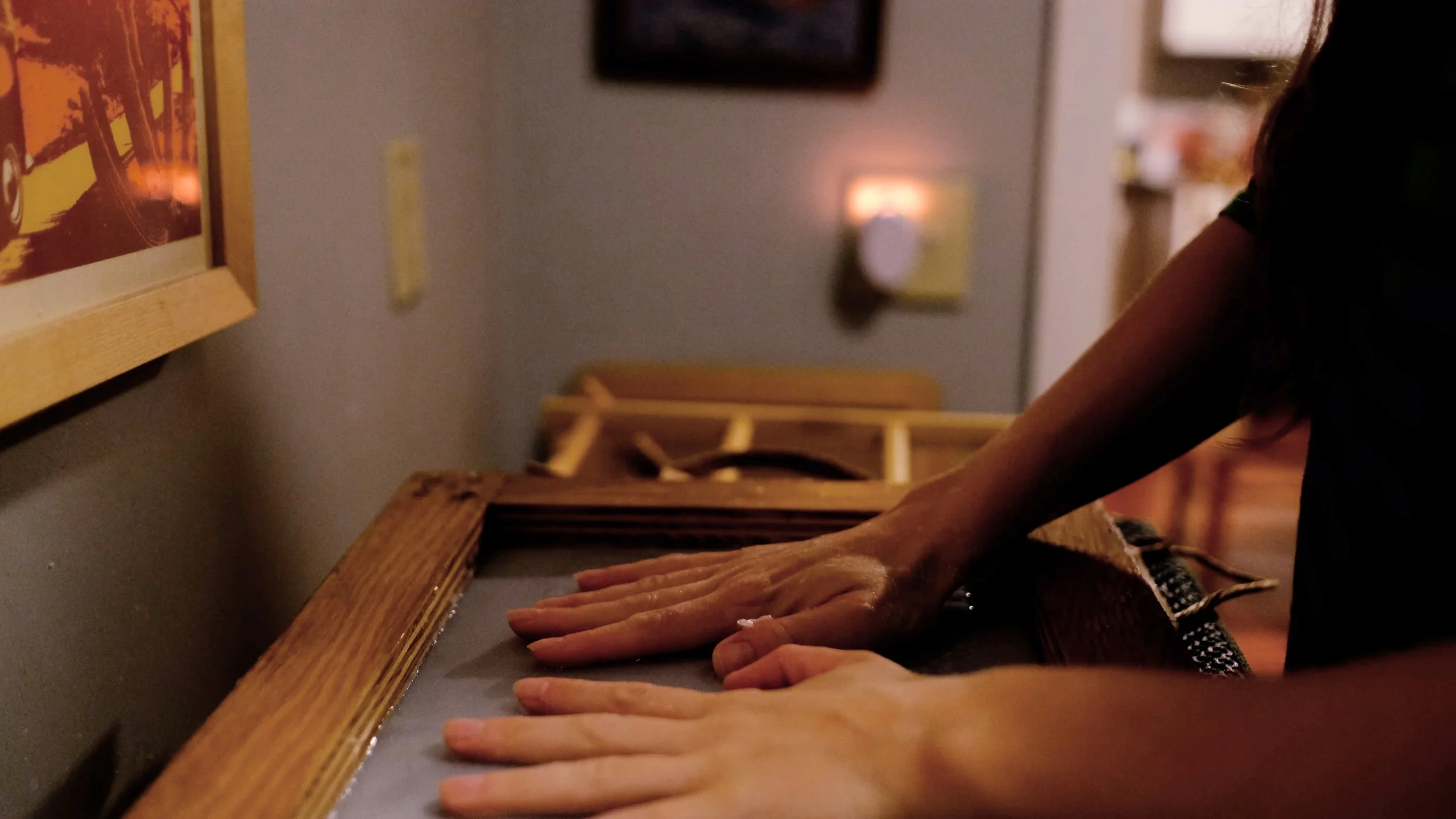
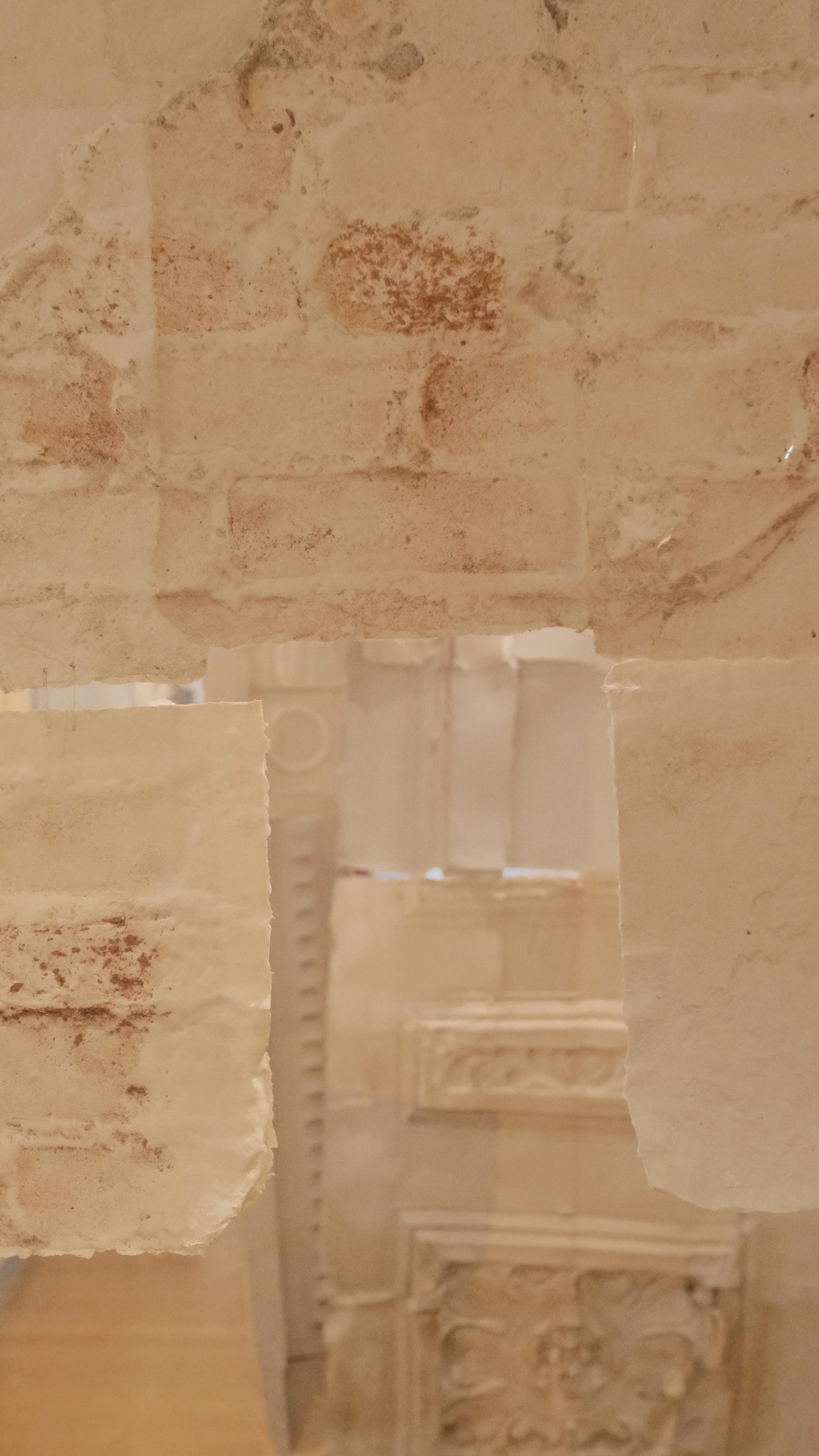
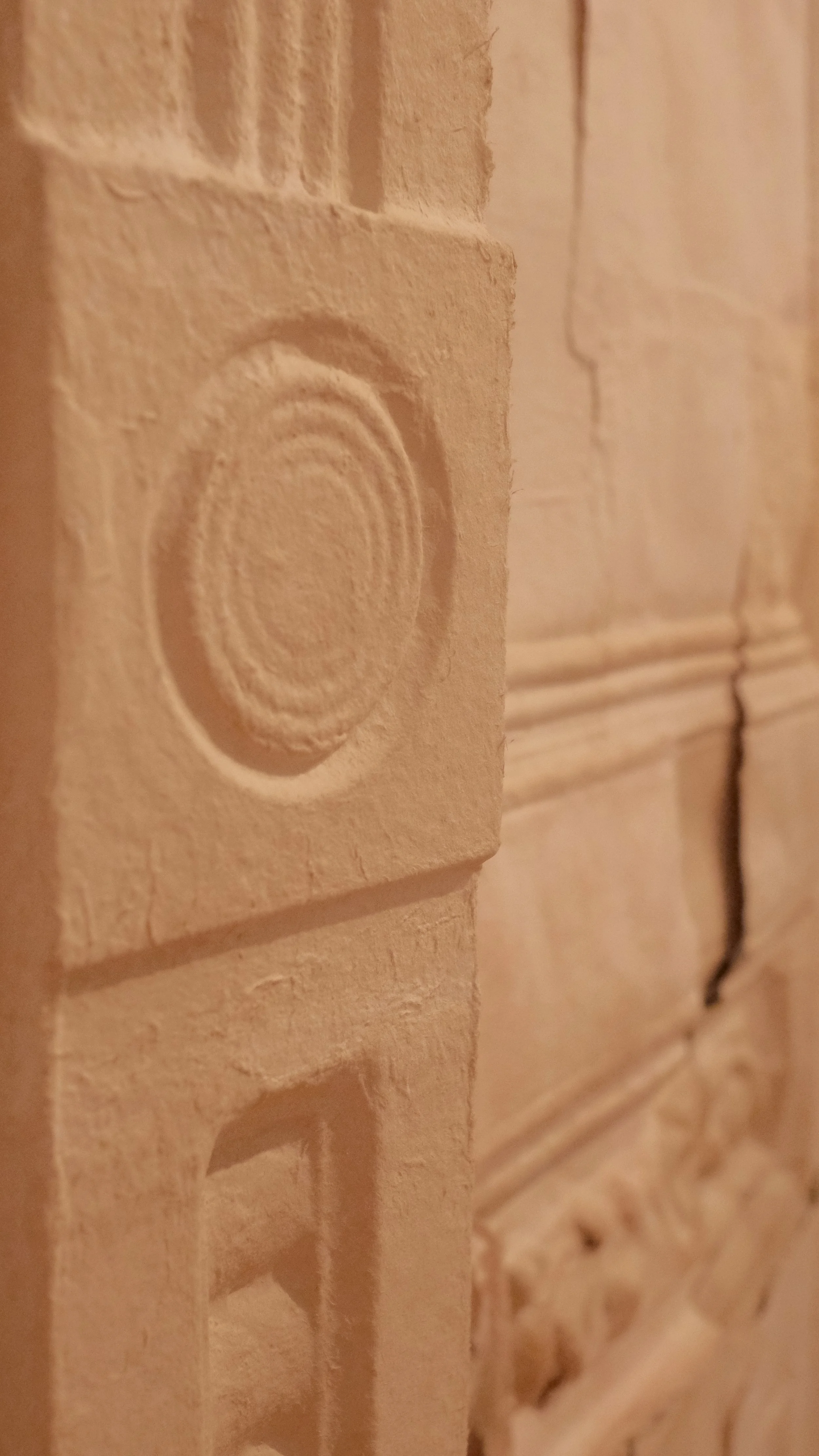
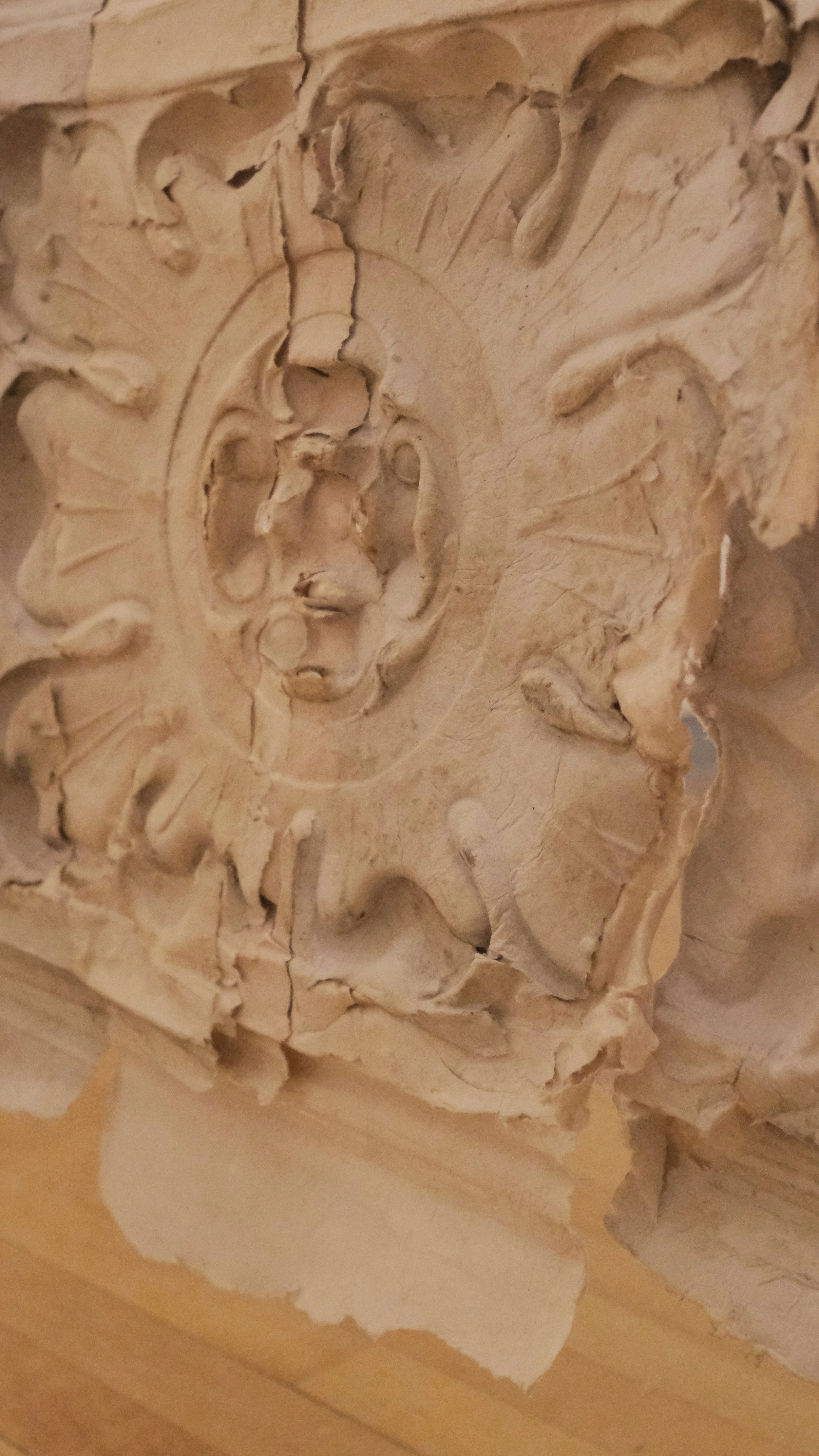
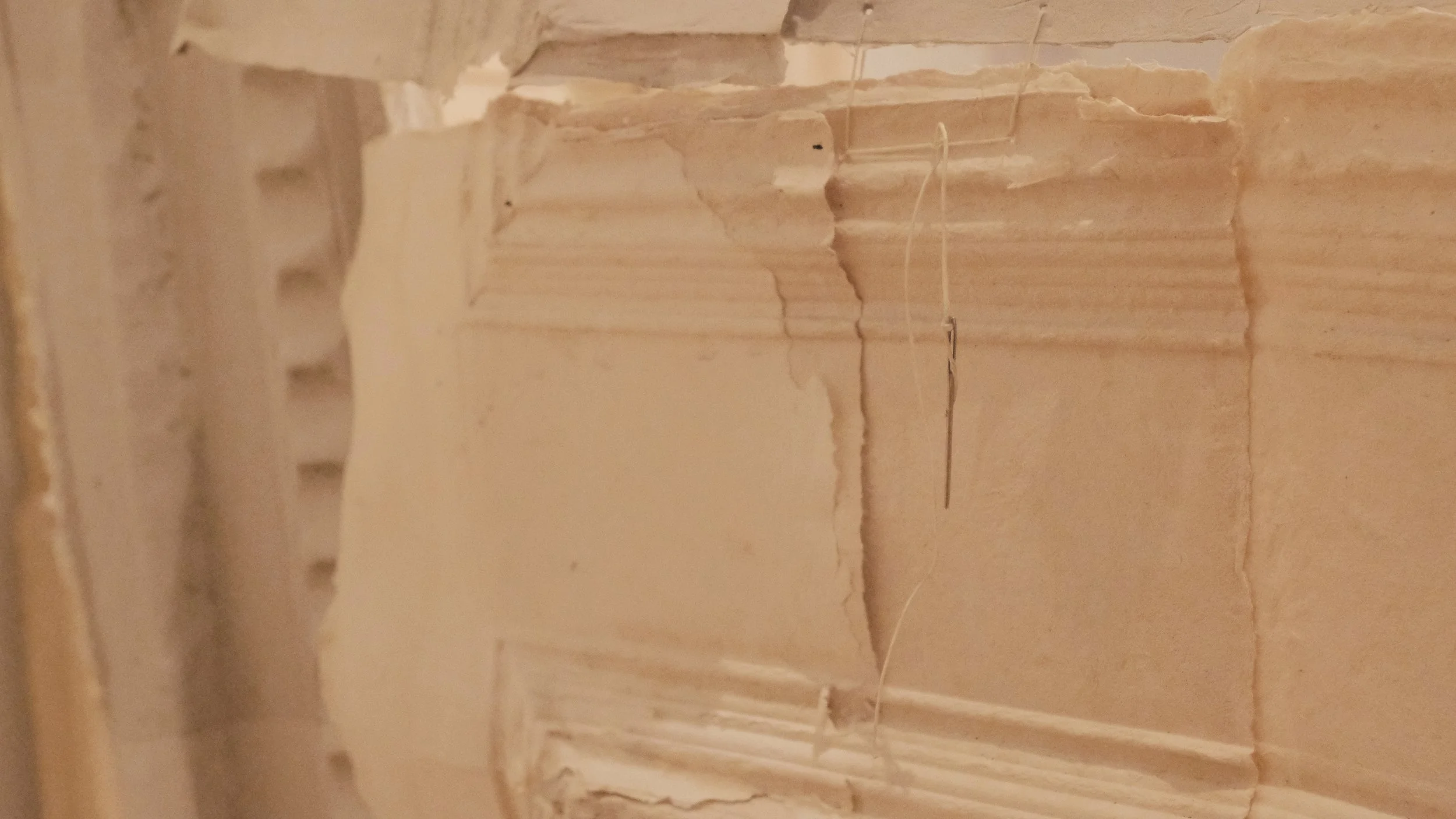
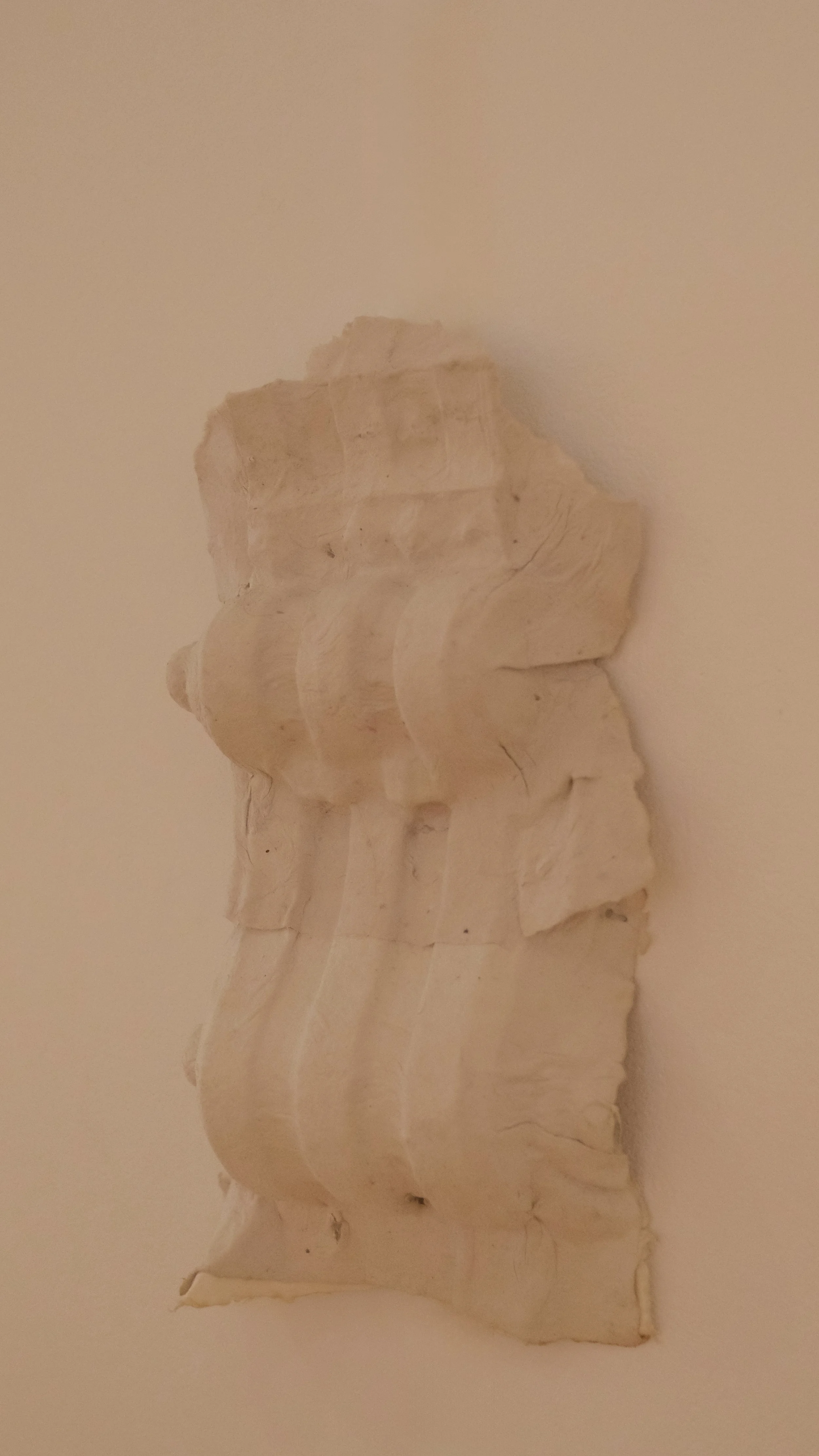
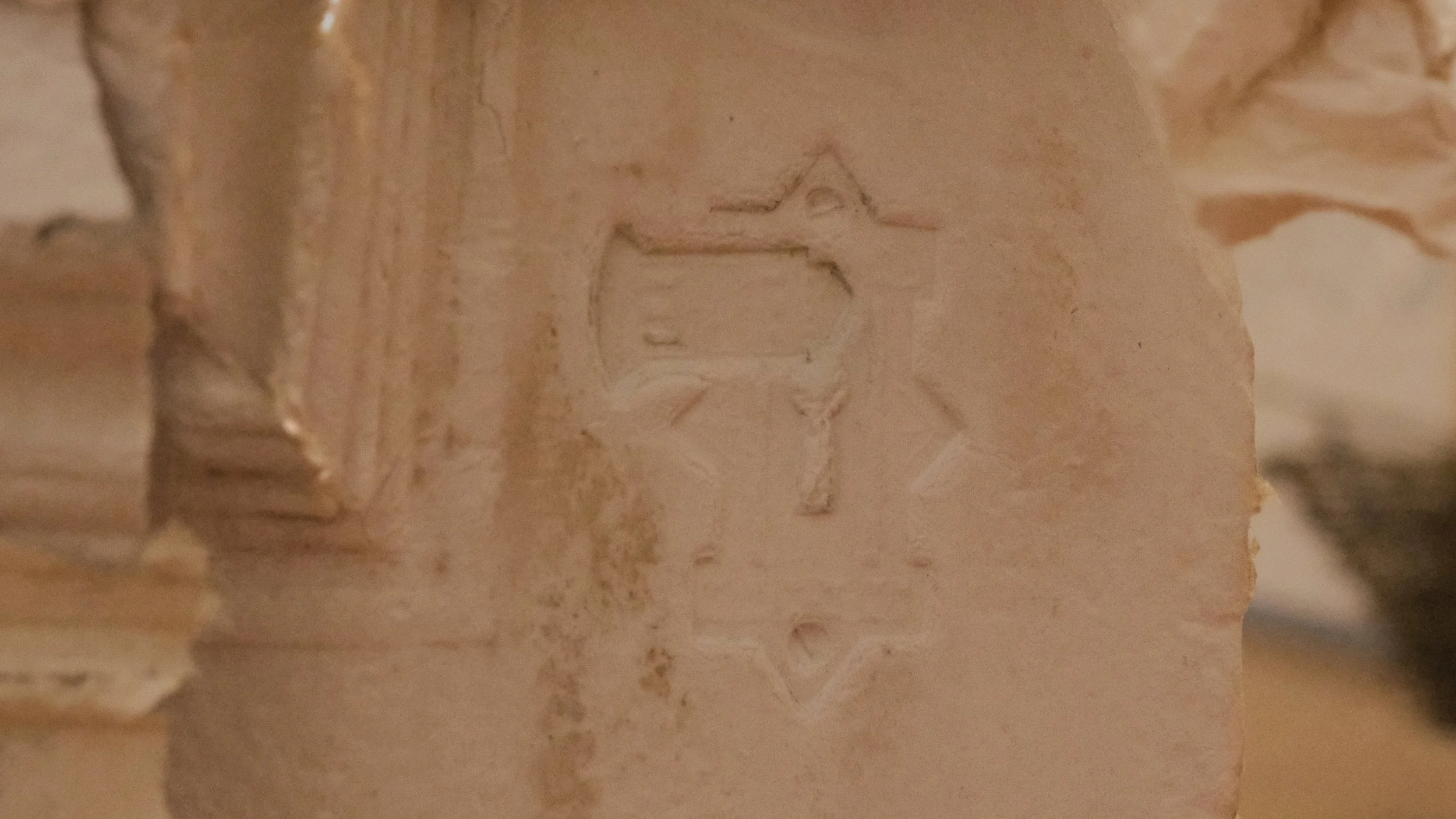
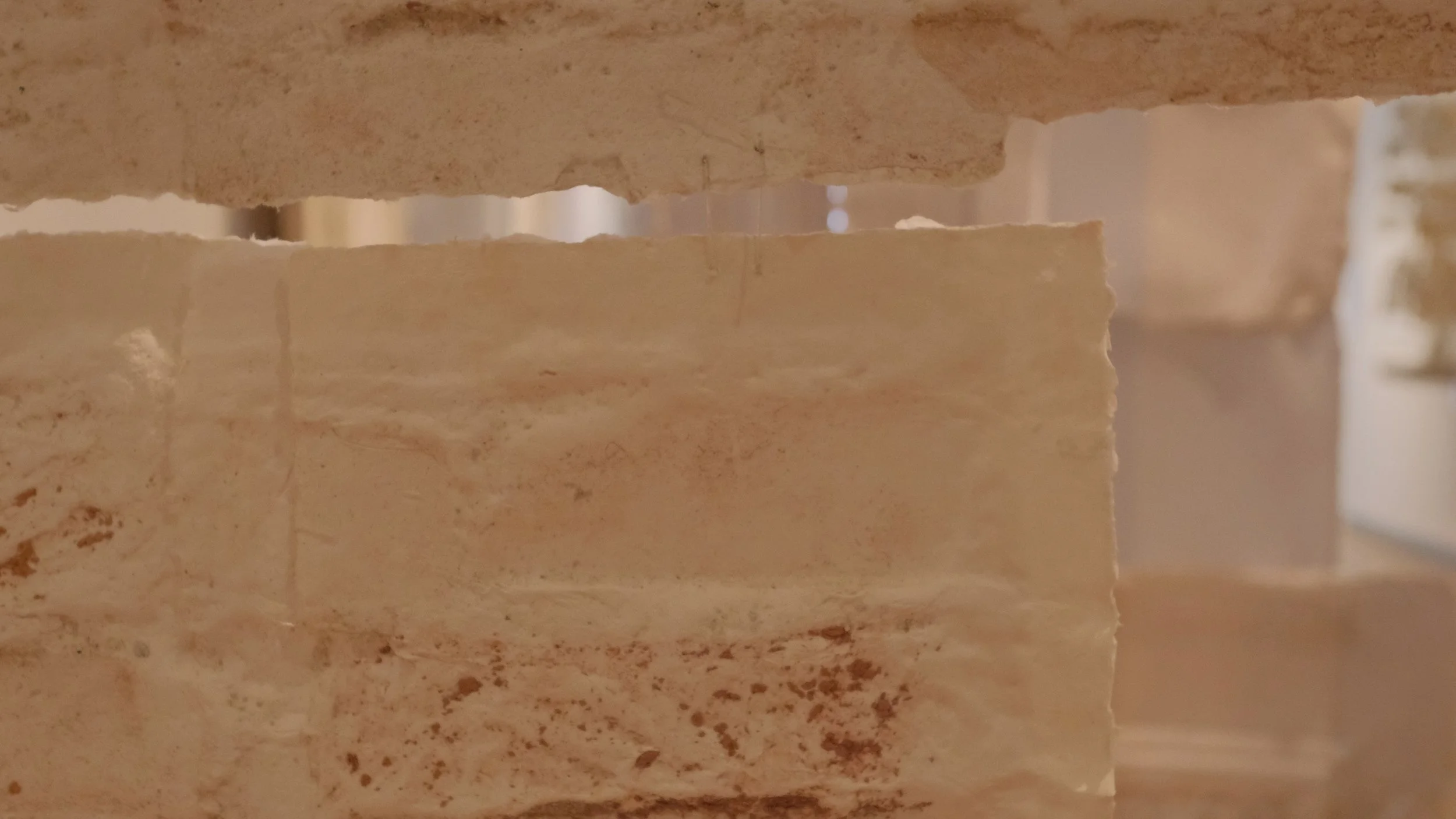
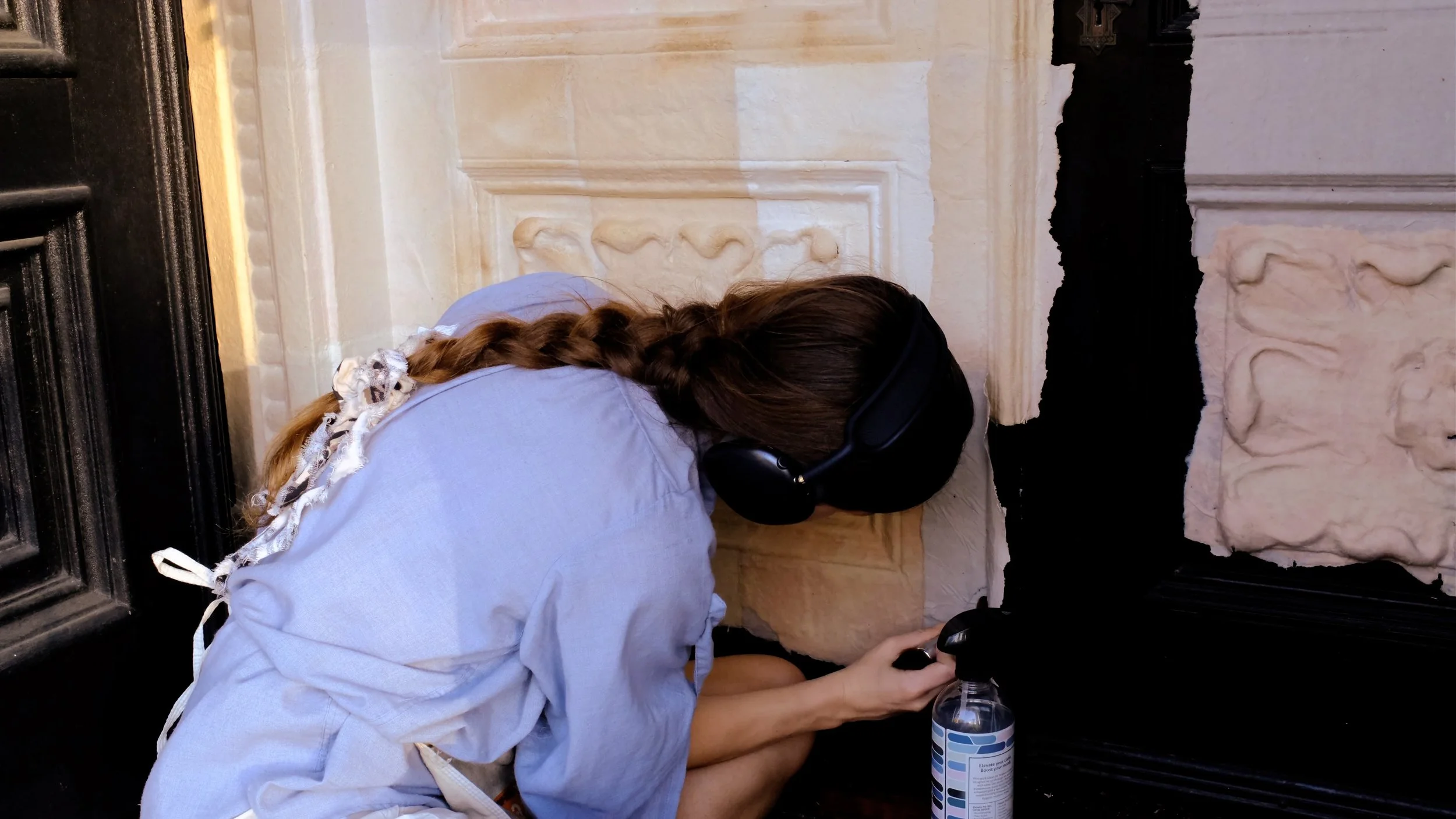
As I pressed the paper directly onto architectural surfaces, working the fibers into grooves, seams, ornament, and irregularities with my hands, fingertips, and a small brush, I grew a deeper understanding and relationship with the walls in conversation. To press paper into a surface by hand is not to capture it, but to enter into a relationship with it and the many hands that have worked with it before. The resulting form carried the textures, imperfections, and traces embedded within the wall, but existed as its own object. What emerged is a record of an encounter shaped by pressure, moisture, time, and the material's inherent properties.
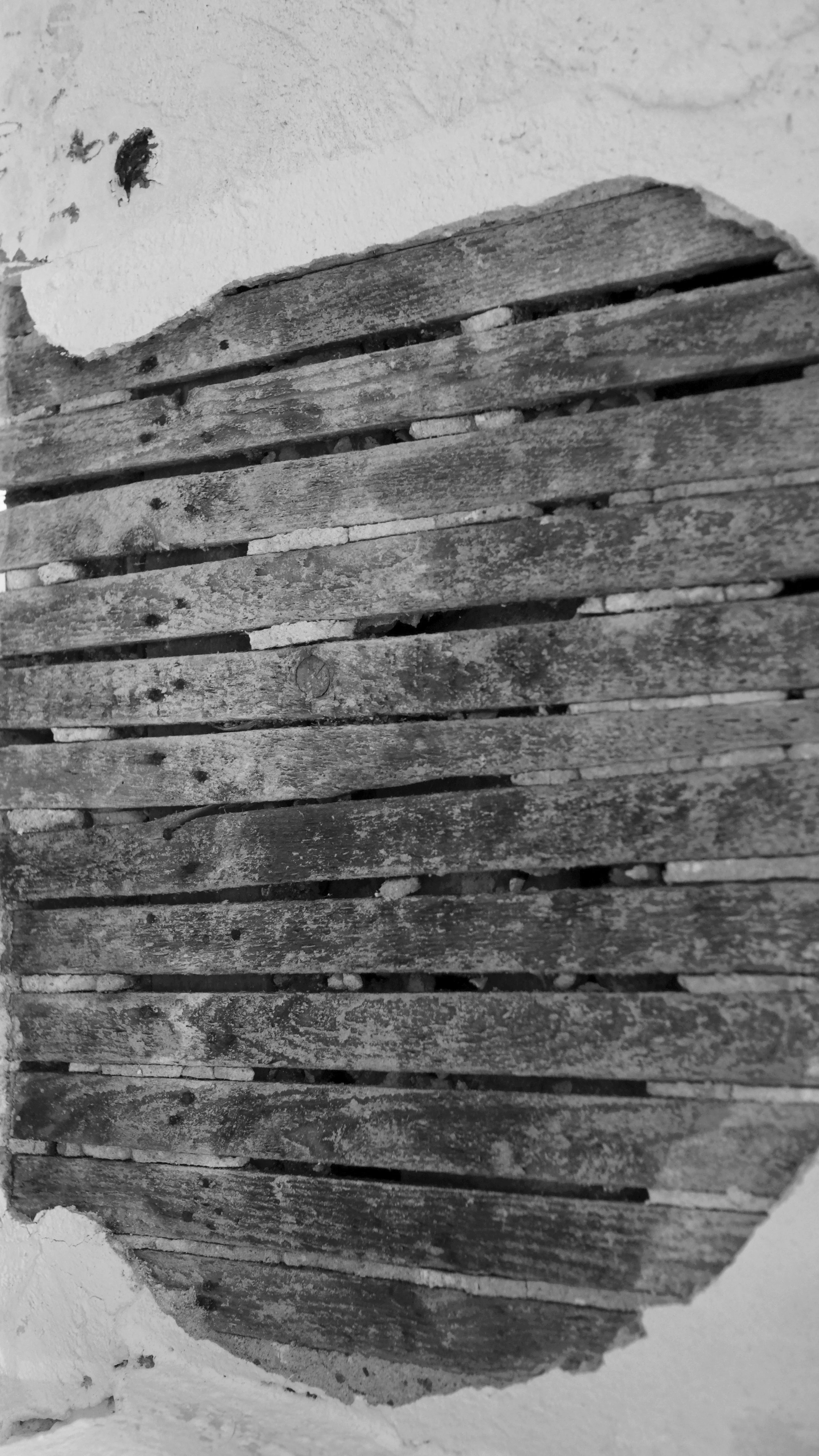
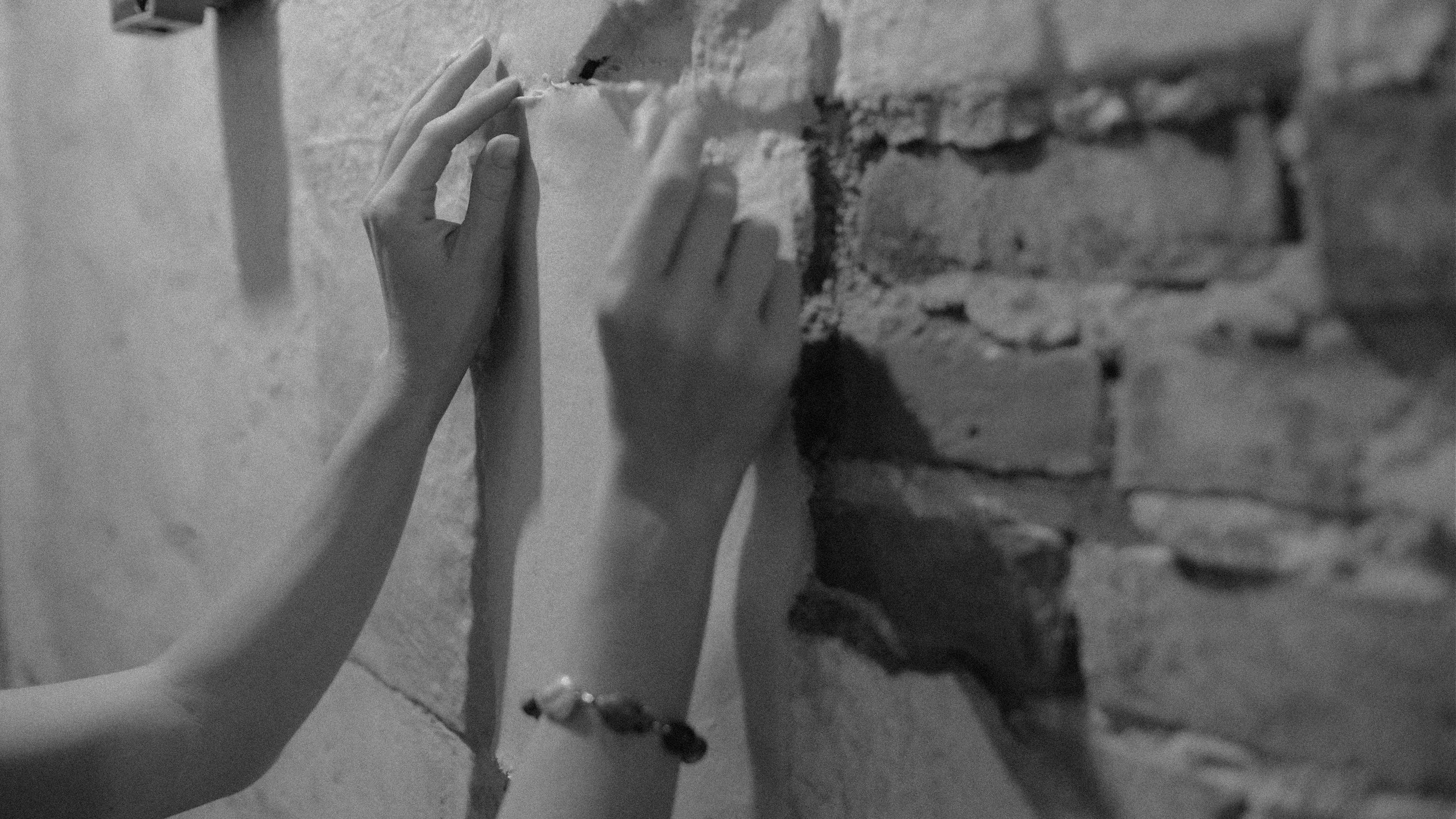
The presence of the hand in the built environment is evidence of the soul and a bridge between past and present.
The hand is often treated as metaphor—something symbolic, abstracted, or used to gesture toward ideas of making and authorship. But the hand is not a metaphor. The walls we inhabit, the structures we preserve, and the environments we move through were built by hands. Driven nails, troweled plaster, patched seams, worn thresholds—layers of repair made over generations—are not imperfections. They are the continuity and purposefulness of the work made visible.
When a hand meets a surface shaped by another, there is an exchange of knowledge, presence, and proximity of otherness. To dwell in the work, we must learn to recognize and remain with the layers of labor embedded within it.
On View