How can a museum extend beyond the museum walls and into the local community?
Site Analysis
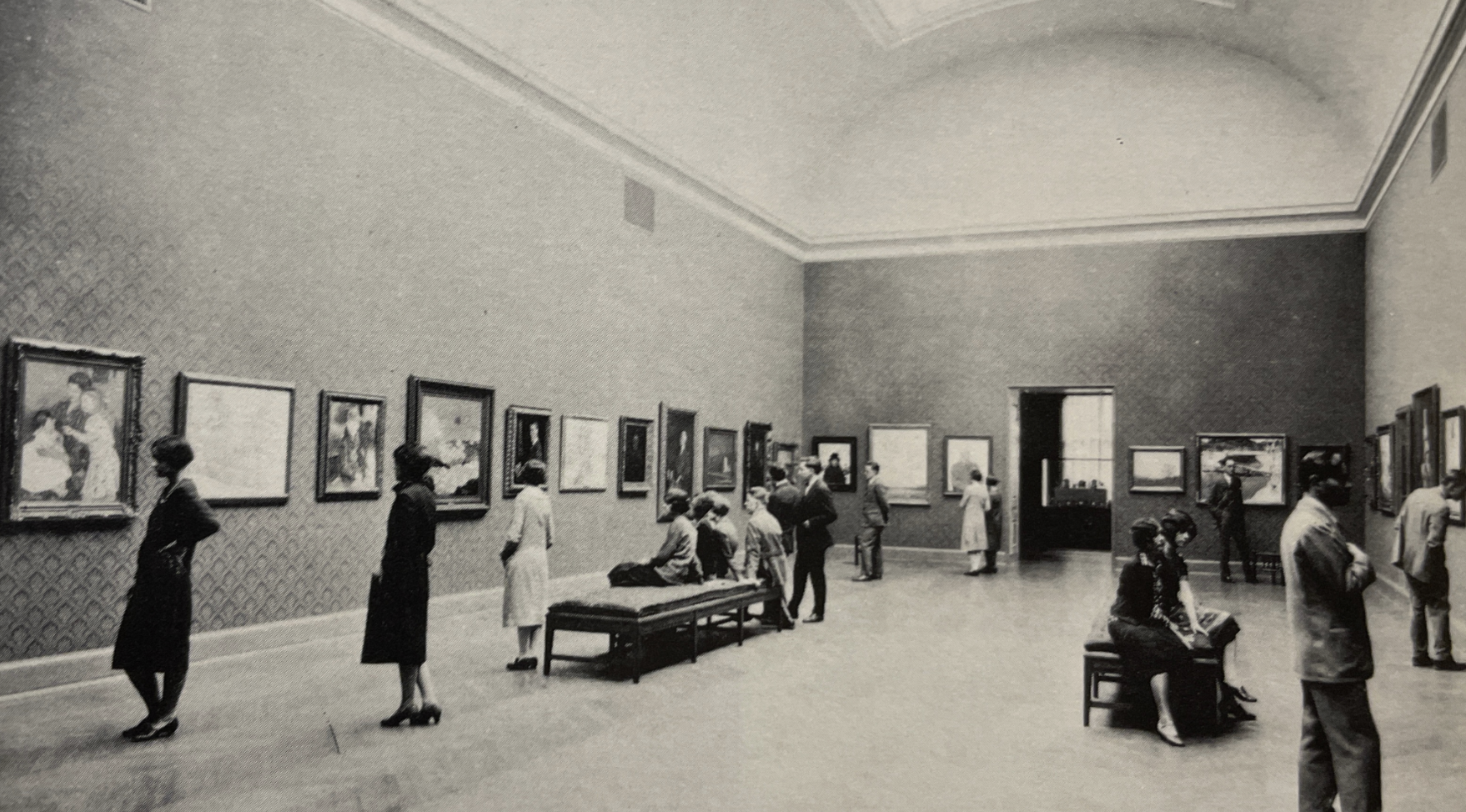
Over the course of two weeks, I made daily visits to the museum's Grand Room, observing how people move and interact with the space. The gallery is populated with European Paintings, some of which are pictorial narratives portraying actual people from the past, while others depict religious subjects or scenes from ancient history and classical mythology. The collection was never intended to be inert; it was conceived as a teaching tool. However, today, the museum feels fixed with permanent, static galleries that leave little room for change, exploration, or choice in how culture is consumed.
Site documentation, notes, sketches, and field recordings were taken and compiled into a short animation.
This research for intervention builds on broader questions: What is the role of art museums today? Whom do they represent? What functions do they perform, and how do they communicate or feel?
Schematic Diagram
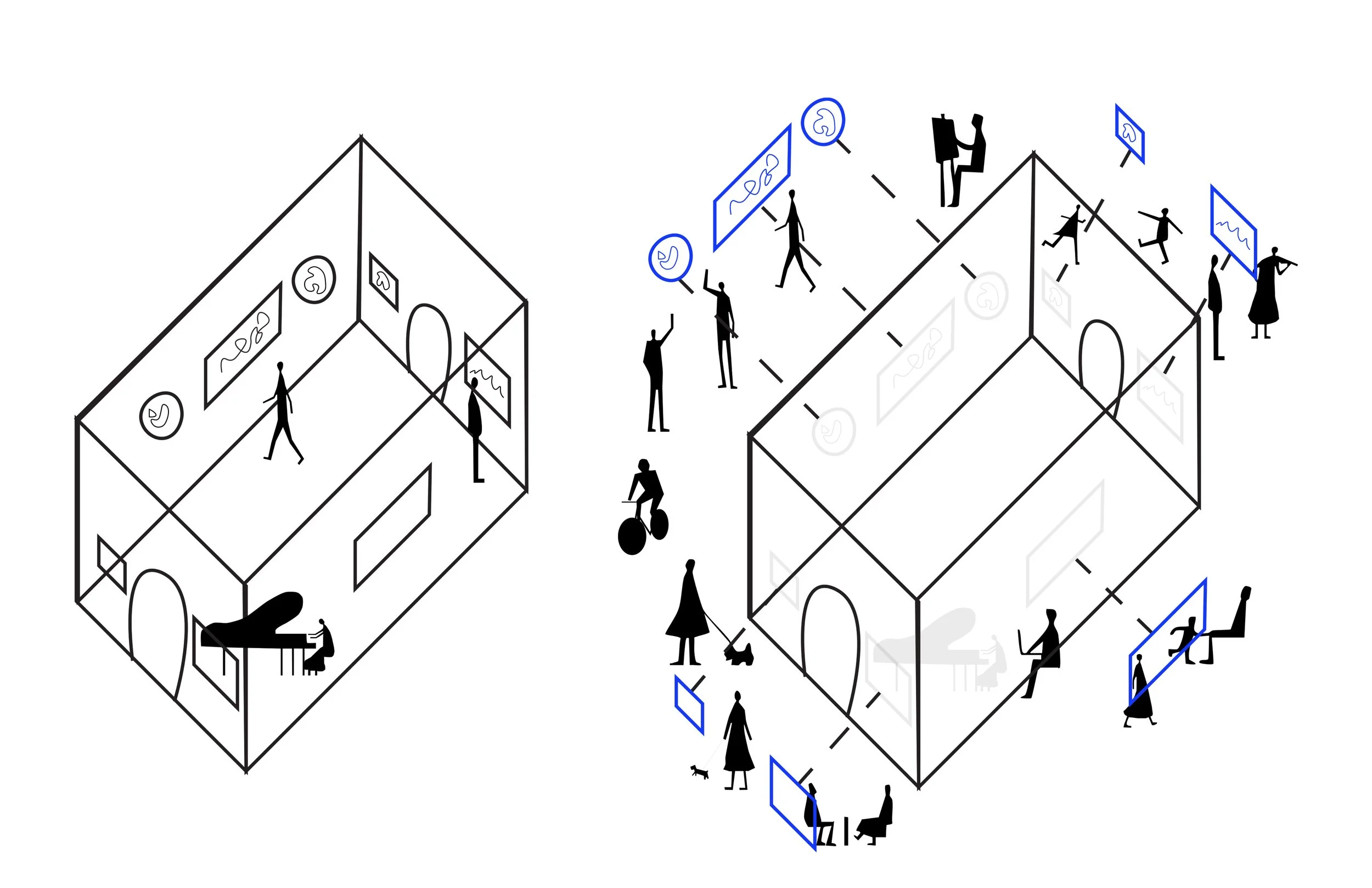
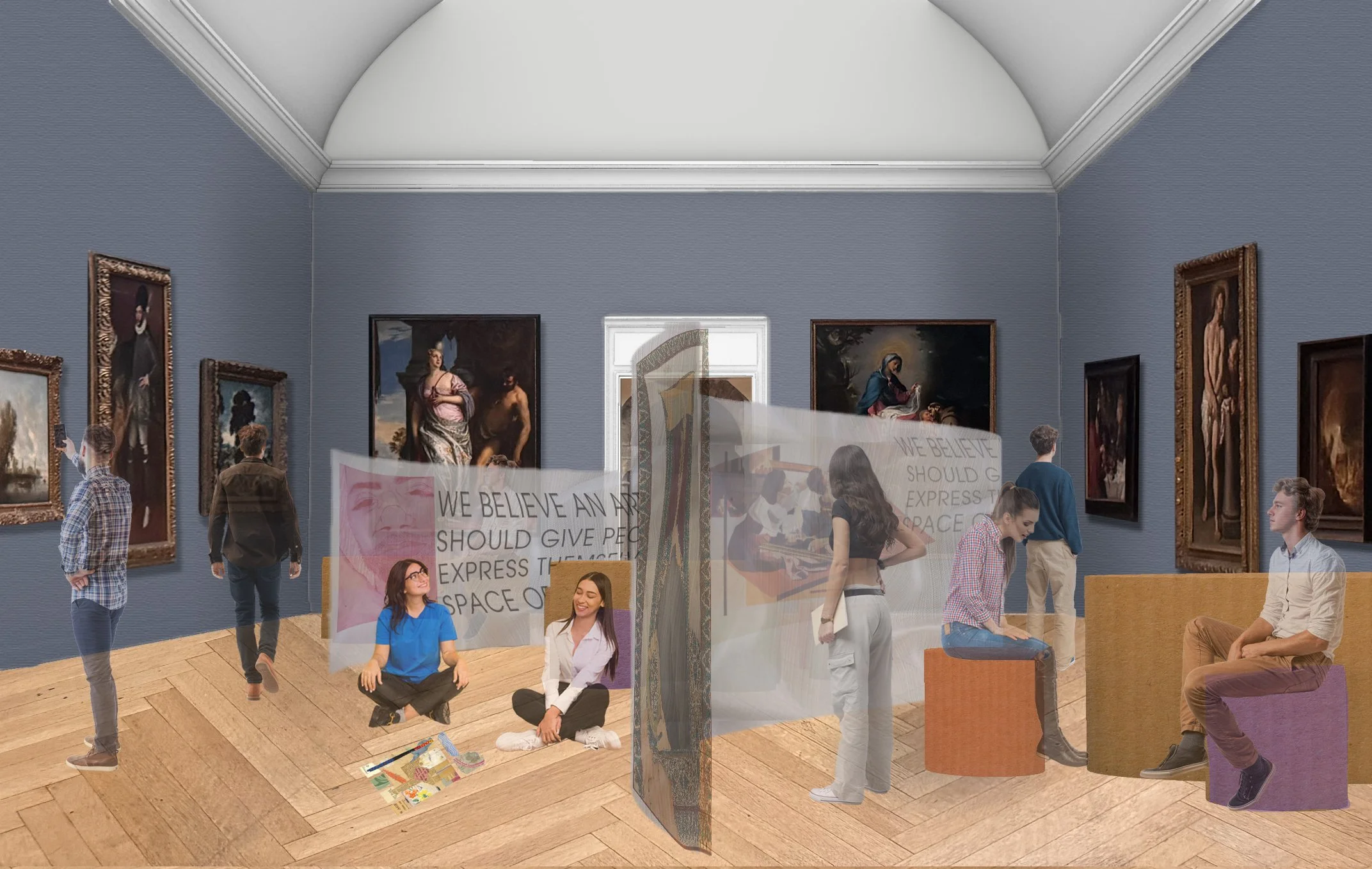
“We believe an art space should expand beyond their walls, reaching into communities and neighborhoods to welcome them.”
Process Renderings
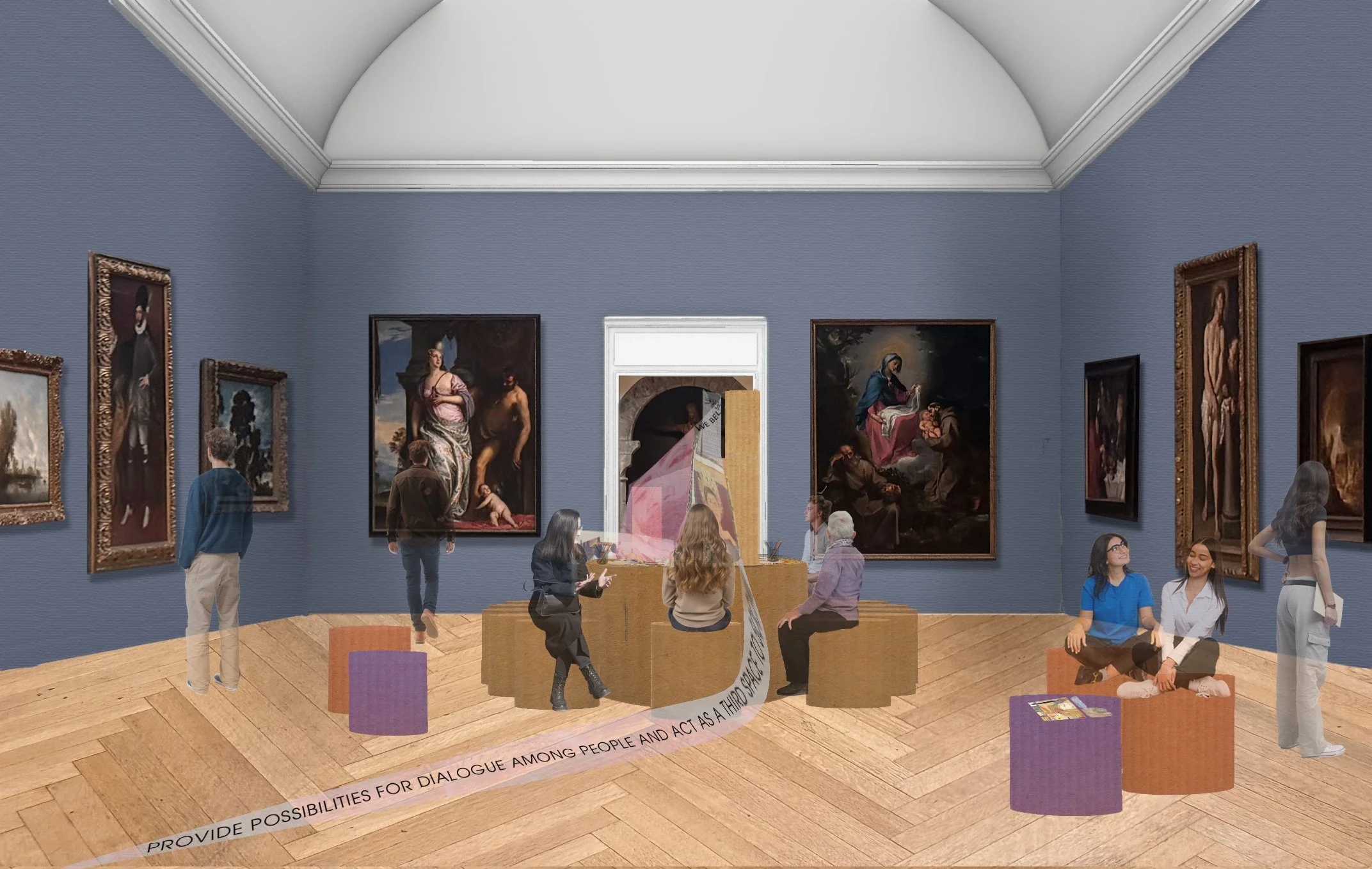
Manifesto
We believe art spaces should:
be comfortable for visitors to express themselves freely.
have a flexible design to encourage engagement among local communities.
prompt diverse ways of looking at art to urge collaboration among visitors.
be modular to host a wide range of experiences and activities.
have a unique graphic identity to be distinctly recognized by its community.
treat labels as creative elements to enrich the narrative of the artwork.
use creative wayfinding systems to tell stories through the journey of a visitor.
provide dynamic opportunities for viewers to interact with the artwork.
create possibilities for dialogue among people to act as a third space to socialize.
the manifesto was written collectively with a group of colleagues at RISD.